
Nacorama · Field Notes
How much does a TV advert cost in the UK? (2026)
Production, airtime, Clearcast, subtitles and actor fees: every line on the bill, sourced and added up.
Quick answer: a UK TV advert is two bills: making it and airing it. A broadcast-quality ad usually costs £10,000 to £25,000 to make (ours start at £15,000). Airtime starts at roughly £2,000 to £3,000 for one ITV region or a Sky AdSmart campaign, and passes £35,000 for a single national peak-time spot. Clearcast approval is free.
Our directors have made TV commercials for Amazon and L'Oréal and a campaign for the Michael Bublé fragrance line, and our own prices are printed on this site, not hidden behind a "let's jump on a call".
Right. You typed "how much does a TV advert cost" into Google, which means one of two things.
Either you have a product and a dream, or your boss has a product and a dream and you have a deadline. (I see you, deadline person. Sit down. Have a biscuit.)
I'm Alex, I direct commercials, and I am legally required by the internet to open with "it depends". I won't.
I'll give you real numbers, every one linked to where it came from, and I'll add them up with my calculator. (Holds up calculator. It is sticky. Nobody knows why.)
What goes into the cost of a TV advert?
Every UK TV advert has the same five lines on the bill: production, airtime, Clearcast approval, subtitles, and rights for any actors or music. Production and airtime are the two big ones.
| Line | What it is | Typical UK cost |
|---|---|---|
| Production | Idea, script, shoot, edit, grade, sound | From £15,000 with us. Industry low-budget band £10,000 to £25,000 (Square Elephant) |
| Airtime, Sky AdSmart | Your ad shown to chosen households | Campaigns from about £3,000 (Rhino, agency figure) |
| Airtime, one ITV region | Spots in one part of the country | Often from about £2,000 (One Day Agency) |
| Airtime, national ITV | One 30-second spot | £3,500 to £5,000 daytime, over £35,000 prime time (One Day Agency) |
| Clearcast approval | The legal check every UK TV ad needs | Free for standard clearance (Clearcast) |
| Subtitles | Required by Channel 4 from 1 March 2026 | £200 + VAT per ad through Clearcast (Clearcast) |
| Actor usage fees | Paid for each actor seen on air | Upwards of £2,000 per featured artist (Spotlight) |
The other three are small, but they are the ones that ambush people in week six. (Dramatic music. It's the subtitles. It was always the subtitles.)
Notice how none of those lines says "and a little bit extra for the director's ego". You're welcome. Now let's take them one at a time, starting with the one I'm suspiciously keen to talk about.
How much does it cost to make a TV advert?
Making a broadcast-quality TV advert in the UK typically costs £10,000 to £25,000 at the lean end, £25,000 to £75,000 in the middle, and £75,000 to £250,000 or more at the top, according to Square Elephant's 2026 guide. Our TV commercials start at £15,000. That number is on our website, which in this industry is roughly the equivalent of taking your shoes off at a dinner party.
Why does a TV spot cost more than a regular brand film? Broadcast brings a bigger crew, more shoot days and more versions to deliver.
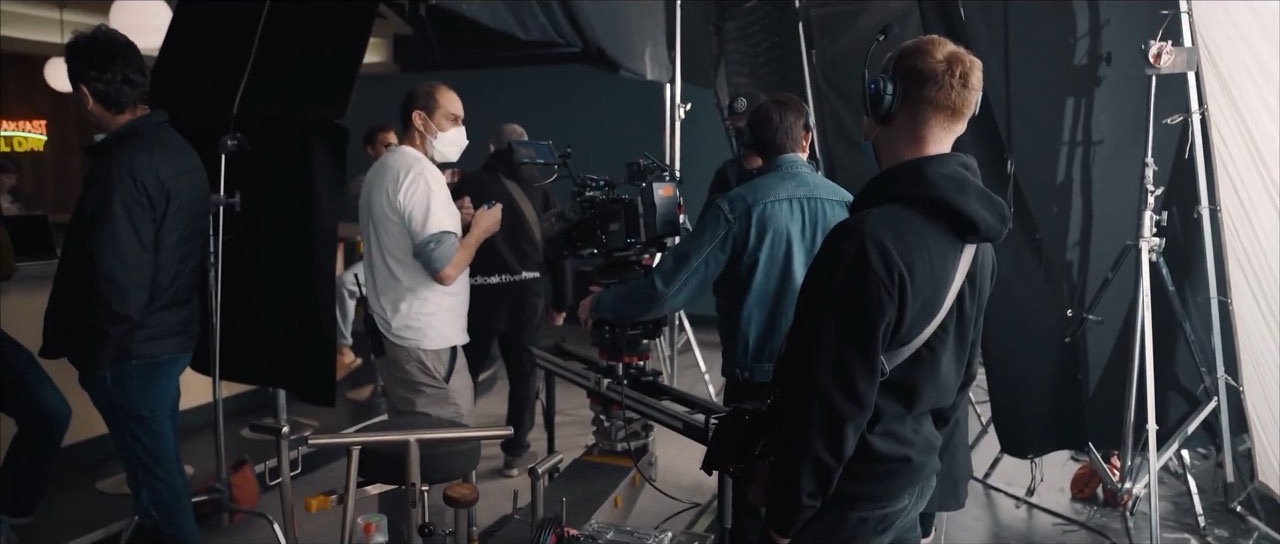
A 30-second ad sounds short until you realise it also needs to exist as a 20, a 10, a 6, a streaming master and a vertical cut for the people who watch TV on their phones. (Which is everyone. Including me, right now.)
Three things move a production budget more than anything else:
- Shoot days. The biggest single cost. One well-planned day beats two loose ones, and it beats them by about a day's worth of crew.
- Who is in it. Real customers, staff and products are cheaper than a cast, and much cheaper than a famous face.
- Live action or animation. Thinkbox, the UK TV industry's marketing body, says animation can bring "significant savings" over live action. Cartoon actors don't need lunch.
Thinkbox also recommends getting three quotes "as a matter of course", which is the most British sentence ever written about money. Do it anyway. If you want one of those quotes to be ours, our TV commercial production page shows exactly what £15,000 buys.
How much does TV airtime cost in the UK?
UK TV airtime is priced per thousand viewers, not per slot, so the cost of a 30-second spot depends on how many of your target audience are watching. A single national ITV spot runs from about £3,500 in the daytime to over £35,000 in prime time, while one ITV region can start around £2,000 (One Day Agency).
That range is the size of a car. A small car versus a car with a pool. (Cars don't have pools. This one does.)
| Where it airs | Typical cost |
|---|---|
| One ITV region, off-peak | From about £1,000 a spot, campaigns often from about £2,000 |
| National ITV, daytime | £3,500 to £5,000 |
| National ITV, prime time | Over £35,000 |
| ITVX streaming | £30 to £60 per thousand views |
Source: One Day Agency, December 2025.
The industry measure is cost per thousand, or CPT. Thinkbox's own worked example comes out at £6.25 for every thousand people who see the ad. (Reaches for calculator. Still sticky.) That is 0.6p a viewer, which sounds tiny until you remember you are buying millions of them at once.
Broadcasters set their prices from a Station Average Price, which Thinkbox explains is "calculated by dividing total revenue by total viewing". Translation: when lots of advertisers want the same viewers, the price goes up. It's surge pricing, with Ant and Dec.
Three things push your airtime price around, per Thinkbox's cost guide:
- Where. London is the most expensive region. (Of course it is. Even the adverts pay London rent.)
- When. January is the cheapest month and September to November the dearest, because everyone is fighting over Christmas.
- Who. Narrow audiences cost more per head than "adults, generally, awake".
Does a 10-second TV advert cost less than a 30-second one?
Yes, but not proportionally. Airtime is priced against a 30-second spot, and Thinkbox's length factors show a 10-second spot costs half as much, not a third, because "there is a slight loading on 10s and 20s". So shorter is cheaper, just not as cheap as your maths teacher would like.
| Spot length | Cost compared with a 30-second spot |
|---|---|
| 10 seconds | 0.5 times |
| 20 seconds | 0.8 to 0.85 times |
| 30 seconds | 1 times (the standard) |
| 40 seconds | 1.33 times |
| 60 seconds | 2 times |
The trick most brands use: launch with a 30 so people get the story, then run 10s and 20s to remind them.
It's the TV version of telling a joke once properly and then just saying the punchline at parties. (This works. My friends would disagree. My friends are wrong.)
How much does Sky AdSmart cost?
Sky AdSmart campaigns typically start at about £3,000 of media spend, according to agencies that buy it, including Rhino and One Day Agency. Sky doesn't publish a minimum itself, so treat that as the going rate rather than a price list. It's the cheapest proper door onto real TV, which is why so many first-time advertisers walk through it.
AdSmart works by showing "different ads to different households watching the same programme". So a pet shop in Leeds and a bank in London can both be "on Gogglebox" in the same break, to completely different homes. (The dog on Gogglebox will never know. Please don't tell him.)
One Day Agency puts the cost at £30 to £60 per thousand views, and says you only pay when the ad is "viewed for at least 75% of its duration". That's a far higher rate per viewer than national TV, so think of it as the posh sandwich of airtime. You are paying to skip everyone who was never going to buy, which is a fair trade if your customers live in six postcodes.
Can a small business advertise on ITVX or Channel 4 streaming?
Yes, and it got much easier in 2026. On 23 June 2026, ITV, Sky and Channel 4 launched Universal Ads, which lets small and medium-sized businesses run one campaign across all three and "go live in minutes". You pick a budget, pick an audience, upload the ad and press go. It is basically online shopping, except the basket is ITV.
Trade press reports it has "no minimum spend" and takes a credit card. The official press release doesn't state a minimum, so check before you plan around it.
(I checked. Twice. Then a third time, because my calculator was being weird.)
The other doors are still open too. ITV's Planet V is now "the exclusive entry point for ITVX advertising", and Channel 4 credits its "lack of minimum spend requirements" with winning over smaller advertisers. Your ad still needs Clearcast approval to run on these channels, which brings us to everyone's favourite section. (Nobody's favourite section.)
What does Clearcast cost, and how long does it take?
Standard Clearcast approval is free to advertisers: Clearcast says clearance "is paid by Clearcast stakeholders if your ad is transmitted on a channel we clear for" (Clearcast). Some websites quote £350 to £1,500 for it. Those websites are wrong, and I say that with love.
What Clearcast costs you is time. Their FAQ says to "allow two to three weeks", and script approval alone "takes about two weeks" on average.
You also have to send the script first, even if the ad is already made. (Yes, even if it's already made. No, you can't skip it. Yes, I asked.)
The paid extras are all about speed or fixes. (Clearcast's menu, like a restaurant where every dish is "hurry up".)
| Extra | Cost | What you get |
|---|---|---|
| Fast Track | £660 + VAT | Feedback within one working day (Clearcast) |
| 2-hour final approval | £1,320 + VAT | Final approval within two hours, once a rough cut is approved (Clearcast) |
| Duplicate versions | Up to £250 + VAT each | Extra copies with cosmetic changes, like a new grade or voiceover (Clearcast) |
| Subtitles | £200 + VAT per ad | Required by Channel 4 since 1 March 2026, and by ITV by January 2027 (Advanced Television) |
The money-saving move is boring and it works: send the script early, and plan every version before the shoot. A fix in the script costs nothing. The same fix after the edit costs a reshoot and a very quiet car journey home.
The hidden costs: actors, music and usage rights
Actors in UK TV adverts are paid twice: a fee for the shoot day, and a usage fee once the ad is on air. Spotlight says brands pay "anything upwards of £2,000 to featured artists", and that usage fee only applies "if any recognisable part of you is seen".
So yes, technically a hand model is a bargain. (Writes "hire hands" on whiteboard. Crosses it out. Writes it again.)
Usage fees scale with how much airtime you buy. Equity, the actors' union, runs a UseFee calculator that works the fee out from your TV ratings. A bigger campaign means a bigger usage bill, which is why the cast budget and the airtime budget need to talk to each other early, like divorced parents at a school play.

Music works the same way. A famous track is licensed per use, per channel and per period, and the bill can outgrow the production. (The song is forty years old. It still costs more than my car.) A composed or library track is cheaper and comes with fewer surprises.
The fix is to get every right in writing before you shoot. With us, music licences, model releases and usage rights are handed over in writing, with no annual re-licensing. If that sounds like the kind of paperwork you'd rather not chase, our London TV advert production team handles it as part of the job.
How much does a YouTube advert cost compared with TV?
Thinkbox figures quoted by Toast TV put TV at £7.78 per thousand views and YouTube at £11.63, with other online video around £129. So per viewer, TV is often the cheaper screen.
Nobody believes this the first time. (Including me. Out came the calculator. Same answer, same stickiness.)
The bigger saving is using one shoot for both. Your TV ad becomes the YouTube ad, the 6-second bumper and the vertical cut for social. Plan those at the start and they cost a fraction of a second shoot. Forget them, and your ad lives on TV and nowhere else, like a celebrity who refuses to get a phone.
Three realistic budgets for a first TV advert
Here are three ways to get on TV for the first time, built from the sourced figures above. They're worked examples, not quotes. Your idea, your cast and your audience will move them.
| Route | Production | Airtime | Subtitles | Starting total |
|---|---|---|---|---|
| Sky AdSmart test | From £15,000 | From about £3,000 | £200 | From about £18,200 |
| One ITV region, two weeks | From £15,000 | From about £4,000 (£2,000 to £10,000 a week) | £200 | From about £19,200 |
| National off-peak, two weeks | From £15,000 | From about £20,000 (£10,000 to £50,000 a week) | £200 | From about £35,200 |
Weekly airtime ranges are from Square Elephant. Add actor usage fees if your ad has actors, and VAT throughout.
(Puts calculator down. Washes hands. Picks it back up. Still sticky.)
Is TV advertising worth it for a small business?
For many small businesses, yes. Thinkbox reports that in 2025, 598 UK advertisers spent less than £50,000 on TV, over 400 spent less than £25,000 and more than 200 spent less than £10,000. So if you thought TV was only for brands with a giraffe in the advert, there are about 200 small businesses who'd like a word.
The returns are strong on average. Thinkbox's Profit Ability 2 study found TV returns £5.61 for every pound spent, across £1.8 billion of UK media spend. That figure is an average across big brands, though, and I would be a bad person if I let you put it on a slide unsupervised.
Here's the honest counterweight. The IPA, the advertising industry body, says "the size of a brand is the biggest determinant of advertising profitability". Smaller brands can still win, but they win by being sharp, not by being everywhere.
TV works best for a small business when the product is easy to show, the audience is clear and the website is ready for the spike. (Please fix the website first. I am begging you. Nothing hurts like a great ad pointing at a 404.)
What we see when brands price their first TV advert
When a brand asks us what a TV ad costs, we start with the idea, not the invoice. Our first call and a 10-second proof shot in five days are free, so you see the look before you commit a pound.
(The free bit is real. Not a trick. My accountant has fainted.)
Then the quote lists every line before anything is booked:
- From £15,000 for the TV commercial. Idea, script, casting, a shoot in London or on a studio stage, edit, grade and sound mix.
- Every length you've booked. 30, 20, 10 and 6-second spots, plus broadcast and streaming masters.
- The online versions from the same shoot. Social and YouTube cuts planned with the TV spot, so one shoot covers the whole campaign.
- Two rounds of changes on the edit, included.
- Usage rights handed over in writing. You own the commercial, with no annual re-licensing.
The single biggest saving we see is planning every version on day one. A cutdown made in the edit costs a fraction of a second shoot.
Asking for it after the crew has gone home is how a £15,000 ad becomes a £25,000 ad, and nobody enjoys that meeting. (I've sat in that meeting. Metaphorically. In every industry ever.)
Our wider prices for brand films, product films and shoot days are in how much video production costs in London.
Questions
How much does a 30-second TV advert cost in the UK?
A 30-second TV advert usually costs £10,000 to £25,000 to make at the lean end, plus airtime. One national ITV spot costs about £3,500 in the daytime and over £35,000 in prime time. Regional and Sky AdSmart campaigns start at roughly £2,000 to £3,000.
What is the cheapest way to advertise on TV in the UK?
The cheapest routes are Sky AdSmart, a single ITV region, or a self-serve streaming platform such as Universal Ads. Agencies quote Sky AdSmart from about £3,000. Animation and a short production schedule keep the making cost down.
Does Clearcast charge for approval?
No, standard Clearcast clearance is paid for by the broadcasters, so it is free to advertisers. You pay only for extras: Fast Track at £660 + VAT, 2-hour approval at £1,320 + VAT, and subtitles at £200 + VAT per ad.
How long does it take to get a TV advert on air?
Allow two to three weeks for Clearcast, on top of production. Most of our films take about three weeks from brief to final master, and we plan the schedule backwards from your first air date.
Can I use my TV advert on YouTube and social media?
Yes, if the usage rights cover online. Plan the online and social versions with the TV spot, so one shoot produces every cut. Check actor and music rights cover each channel before the ad goes live.
Planning your first TV advert? See what's included and how it works on our TV commercial production page, or tell us your air date below and we'll reply with a quote that lists every line.